
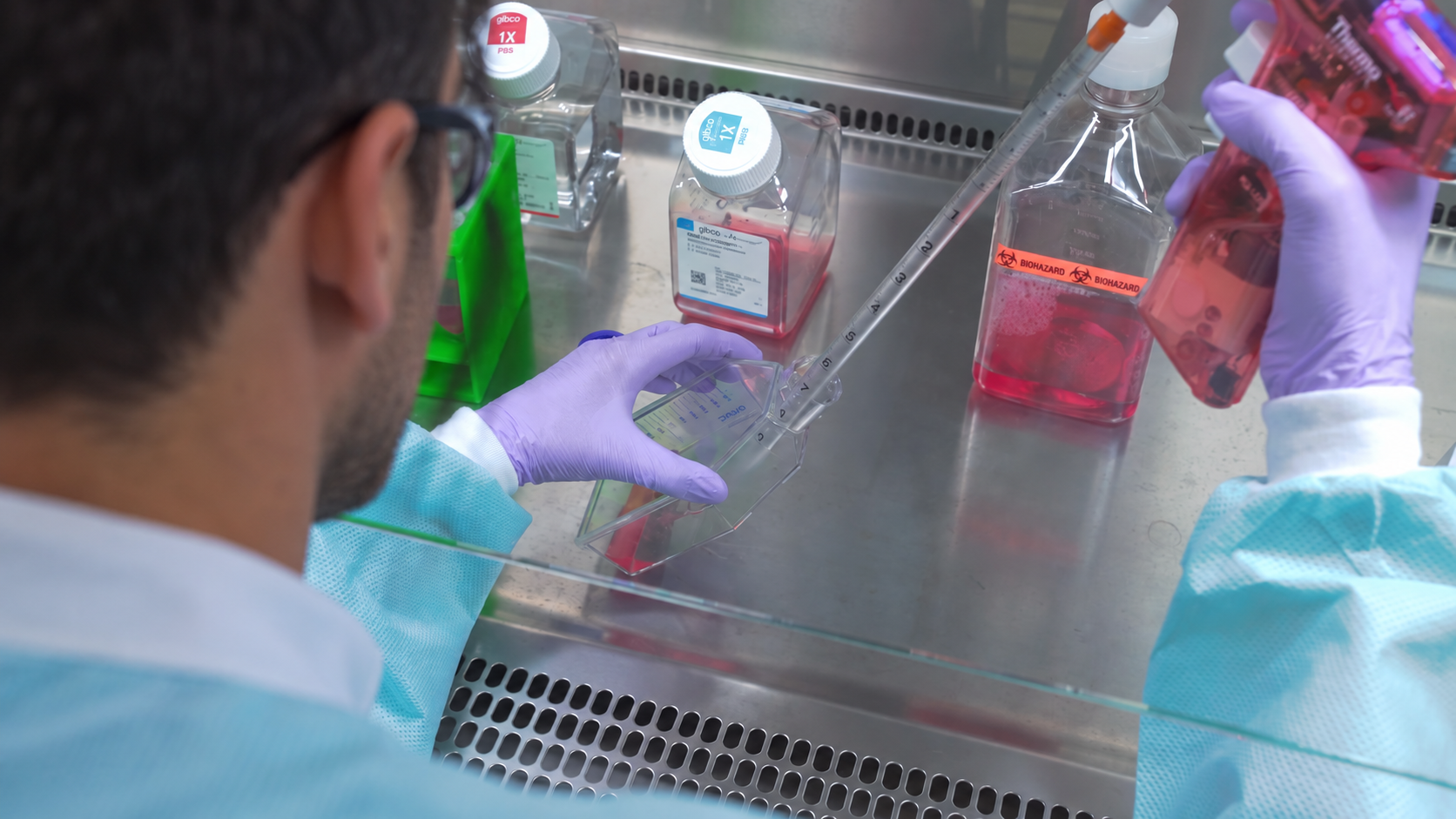

An empty feed entry is a question, not an answer. The culture may have been fed, the task may have been deliberately skipped, or nobody may be able to establish what happened. Those possibilities have different implications for the experiment. The right response is to recover the evidence and preserve its limits—not to choose the outcome that makes a dashboard look complete.
Why a small gap can become a large research problem
The Reproducibility Project: Cancer Biology set out to repeat 193 experiments from 53 papers. Its investigators reported that none of those experiments was described in enough detail in the original publication to design a replication without clarification. They ultimately repeated 50 experiments from 23 papers after encountering multiple practical barriers. This was a selected project, not a representative estimate of all biomedical research, and the shortfall cannot be attributed solely to recordkeeping. [1]
The useful lesson for a culture team is narrower: another researcher needs more than a statement of intent. They need enough context to reconstruct the work. A missing routine entry becomes consequential when someone later asks whether an unexpected result coincided with a different feeding interval, a change of operator, or a new medium preparation.
The workflow below is our practical recommendation for research teams. It is not a claim that a particular documentation system makes an experiment reproducible. Its purpose is to make an uncertainty visible, investigate it consistently, and keep any correction understandable.
Separate the scheduled task from the evidence of completion
Start by identifying exactly what is missing: the culture or batch, the scheduled date, the planned action, and the expected record. “Tuesday’s medium change has no outcome” is more useful than “this culture is overdue”. The first statement identifies a documentation question; the second may be interpreted as an instruction to perform an extra feed now.
Keep three concepts separate in both discussion and software: work planned, work reported as performed, and the evidence supporting that report. A photograph taken later can help establish appearance, but it does not by itself prove that a feed took place. A stock movement may show material was used without establishing which culture received it.
Continue to manage today’s culture using the relevant protocol and the responsible scientist’s assessment. Reviewing yesterday’s record should not silently change today’s schedule. Equally, completing today’s task does not resolve an older gap.
Review a missing entry in a repeatable order
Ask the person expected to perform the task while the event is still reasonably recent. Look for a dated notebook entry, a colleague’s contemporaneous record, or another relevant source that identifies the culture and action. Record which source you used. Do not treat several weak clues as independent confirmation if they all came from the same assumption.
There are three defensible destinations for the review. Confirmed completion can support a late completion entry; a confirmed decision or failure to perform the task can support a skipped outcome with an explanation; unresolved evidence should remain explicitly unresolved. If the application has no dedicated uncertain state, preserve that fact in a linked note and leave the outcome unasserted.
Where accounts conflict, retain the conflict and ask the responsible scientist to decide the next investigative step. The person entering the correction should not have to invent a consensus. Also consider whether the uncertainty affects interpretation of samples or results collected afterwards; a corrected log does not by itself settle experimental validity.
- Identify the exact culture, action and scheduled date before editing.
- Find the most direct available evidence and identify its author or location.
- Choose only an outcome that the evidence supports; retain uncertainty otherwise.
- Record the review decision, its author, the entry time and any required follow-up.
Make a late entry recognisable as a late entry
Record the historical event date separately from the date and time the new entry is made. Retain the original gap or previous value through the available correction history. Name the person making the entry, distinguish them from the person who performed the work, and explain why the entry is being added now.
MHRA’s data-integrity guidance describes audit trails as records that permit reconstruction of changes without obscuring the original information. It also calls for attribution, timestamps and reasons for relevant changes. These are useful design principles for research records, but the document’s regulatory scope is GxP; citing it does not establish that an academic workflow or a software product is compliant. [2]
For UK GLP work, MHRA’s publication page says that the OECD’s 2021 GLP Data Integrity advisory document takes precedence. That OECD document takes a risk-based view of data across its life cycle. A regulated laboratory should therefore apply its own quality system and current applicable requirements, rather than treating this article as a compliance procedure. [3] [4]
Use bulk corrections only when the evidence is genuinely shared
A week of empty entries is not evidence of a week of skipped feeds. Review the dates before selecting them as a group. If three feeds are supported by a notebook and two remain uncertain, they are different cases even if they belong to the same culture.
Before saving a bulk correction, the reviewer should see the affected culture, every date, the proposed outcome, and the explanation. The saved record should make clear that this was one retrospective operation by a named person. A confirmation dialog is useful only if it presents enough detail to detect a mistaken selection.
Do not use bulk backfill as a routine end-of-week cleaning exercise. Frequent backfills are a signal to inspect the working process: access at the bench, confusing buttons, shared responsibility, or a habit of postponing recording. The aim is fewer uncertain events, not merely fewer warning badges.
Review the process, not just the people
A small weekly review can examine how many outcomes were entered late, how many remain uncertain, and which steps repeatedly require investigation. Keep these measures distinct: fast closure is not necessarily accurate closure. Avoid targets that reward staff for converting every gap into a definite outcome.
Invite staff to report omissions early and explain what made recording difficult. MHRA’s guidance explicitly recognises the importance of a working environment in which errors and omissions can be reported. An honest gap is easier to investigate than a confident but unsupported entry. [2]
A useful final check is simple: could a colleague tell what was scheduled, what is known to have happened, what remains uncertain, and who reviewed the discrepancy? If the answer is yes, the record can support a scientific decision instead of concealing the question.
Sources and further reading
- Research publicationChallenges for assessing replicability in preclinical cancer biology
Errington TM et al. eLife 10:e67995 (2021). DOI: 10.7554/eLife.67995.
- Regulatory guidanceMHRA GxP Data Integrity Guidance and Definitions
Medicines and Healthcare products Regulatory Agency, revision 1 (March 2018), especially sections 5 and 6.13.
- Regulatory guidanceGLP Data Integrity
OECD Series on Principles of Good Laboratory Practice and Compliance Monitoring, No. 22 (2021). DOI: 10.1787/45779212-en.
- Regulator updateGuidance on GxP data integrity
MHRA, published 9 March 2018; updated 27 September 2021. Explains the precedence of OECD guidance for UK GLP.
Keep today’s work and historical review in view
CellHood separates today’s scheduled feeds from past feed records needing review. Culture timelines and the audit trail help you inspect the recorded history, while bulk backfill presents the dates and requires a reason. Start with one culture and review its open records against your supporting evidence.